
Delivered
Workflow Optimization
0 - 1 Flow
Research Oriented
Solve a core workflow inefficiency that affects 80% of brokers in India’s urban real estate market.
MakeMyTrip introduced “Refund to My Wallet” to reduce PSP fees and keep users in the flight ecosystem but adoption stayed low.
I redesigned the decision screen using discoverability, scannability, and persuasion to increase wallet selection and reduce refund-timeline queries.
Impact achieved after the development
28.7% increase in wallet refunds selected option
16% drop in customer service calls about refund timelines
11.4% uplift in screen engagement (measured via scroll and click tracking)
Team
6 Designers, 3 Stakeholders, 2 Engineers a and 2 Product Managers
Company
Accolode , New York, USA
Skills
End-to-End, Collaboration, Visual Desin
About the Company
Accolade is a software company based in New York City that is dedicated to revolutionising multi-family property management through its innovative relationship management platform. By leveraging existing property management systems
🎯
Goal
The company aims to scale its presence and digitally transform the urban real estate landscape in India by tackling the complex challenges of property discovery, leasing workflows, and resident communication.
💡
Vision
vision is to build a streamlined digital solution that enhances real estate interactions by addressing the distinct needs and relationships between brokers, prospective buyers and renters, and property managers.
Design objective
To conduct an in-depth exploratory research of the property discovery ecosystem in urban India that helps Deal Meridian to enhance the housing search experience for buyers, renters and sellers.
Initial Problem Hypothesis
India’s urban real estate experience is broken primarily due to poor digital tools for buyers and renters, and that improving discovery and search features would streamline the leasing process.
India’s urban real estate market, despite being valued at over $265 billion, remains largely unstructured and inefficient. Property search, leasing, and communication processes are fragmented across multiple offline channels driven by informal relationships, inconsistent data, and limited digital infrastructure.
This lack of cohesion leads to delayed transactions, mismatched expectations, and a poor experience for prospective buyers, renters, and property owners alike. While proptech platforms have addressed surface-level discovery, the deeper workflow and coordination challenges across stakeholders remain unsolved.
RESEARCH INSIGHTS
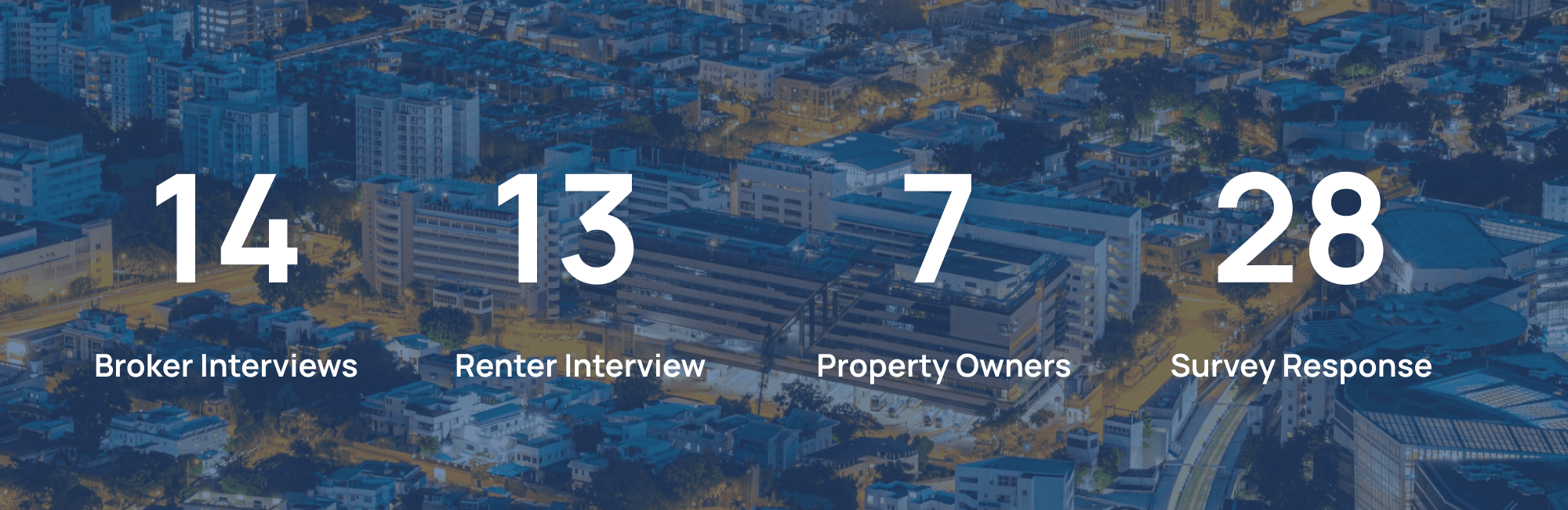
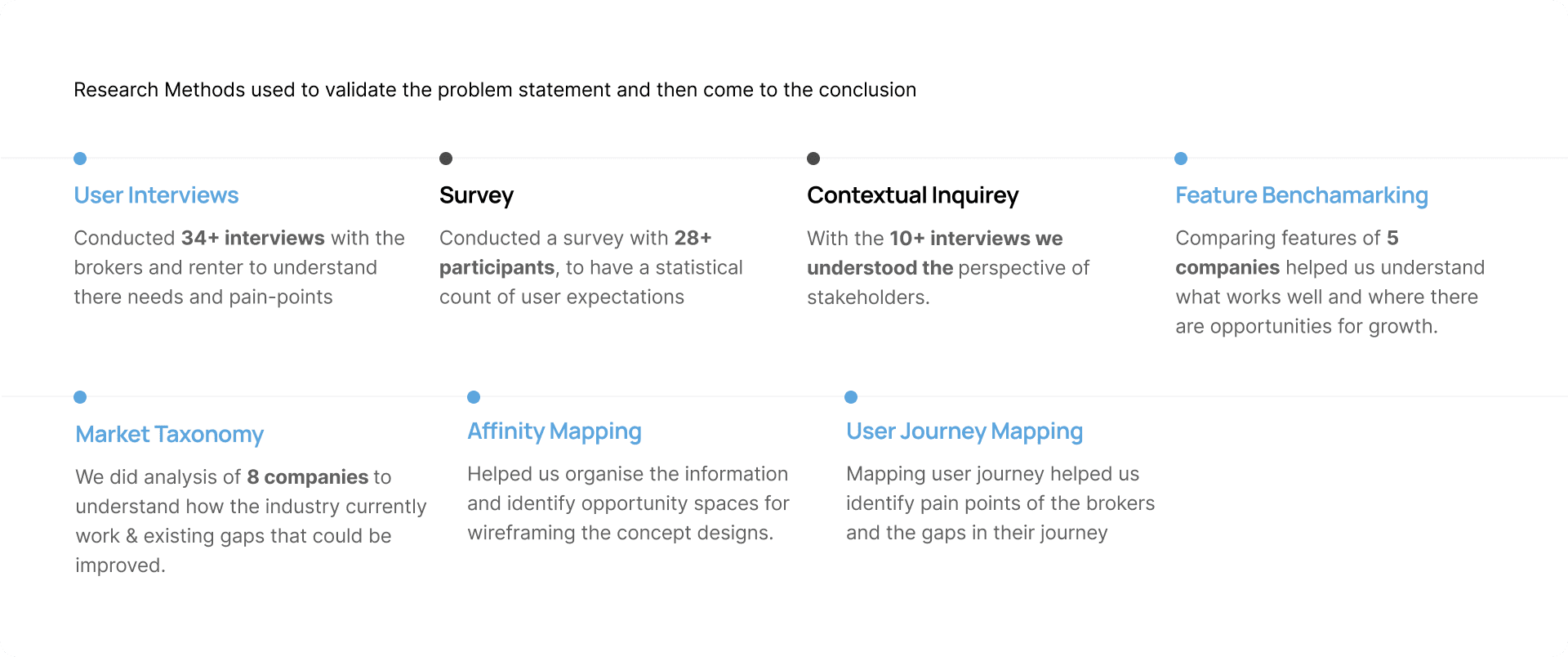
To Validate our hypothesis we conducted user interview with our stakeholders
Through these user interviews, we discovered that brokers sit at the center of this unorganized ecosystem they act as a connectors between property owners, renters, and platforms yet lack the digital tools to manage their workflows efficiently. This insight helped us focus our solution on streamlining and structuring broker operations, with the belief that empowering brokers can uplift the entire real estate interaction funnel.
Problem Statement
Inefficiency in broker's workflows are the Root Cause of Rental and Ownership Friction
Early research revealed that renters and owners depend heavily on brokers. They are the operational backbone of the real estate process. They connect renters to owners, manage negotiations, handle visit scheduling, and are the key decision-makers throughout the property discovery and transaction journey. Yet, they operate with minimal digital infrastructure, causing breakdowns across the entire experience funnel so instead of designing a general property tool, we narrowed focus on streamlining broker workflows.
Why This Problem Is Worth Solving
📊
Market Size
India’s real estate brokerage network includes 500K+ agents, amongest them most of them are unorganized and record data manually with less effeciency
⌛️
Market Gap
Current tools like MagicBricks or 99acres are user-facing only. No end-to-end CRM for brokers exists that integrates in there workflow and manage client preference.
💵
Business Validity
From Business objective having better tools in the system means getting faster deals and more clients engagement and increase in revenue
Business Goals for MVP first design
🧩
Validate Market Fit for Broker Workflow Management
🌐
Drive Platform Stickiness Through Workflow Centralization
📝
Collect Continuous Feedback for Iterative Roadmapping
🖇️
Lay Groundwork for Ecosystem Integration (ShiftHona + CRM)
RESPONSIBILITIES
What was my role in the project ?
SOLUTION
Solving for Scale designing a Broker-Centric System around effective communication, preference matching, and information management
Opportunity 1 : Streamlining Communication
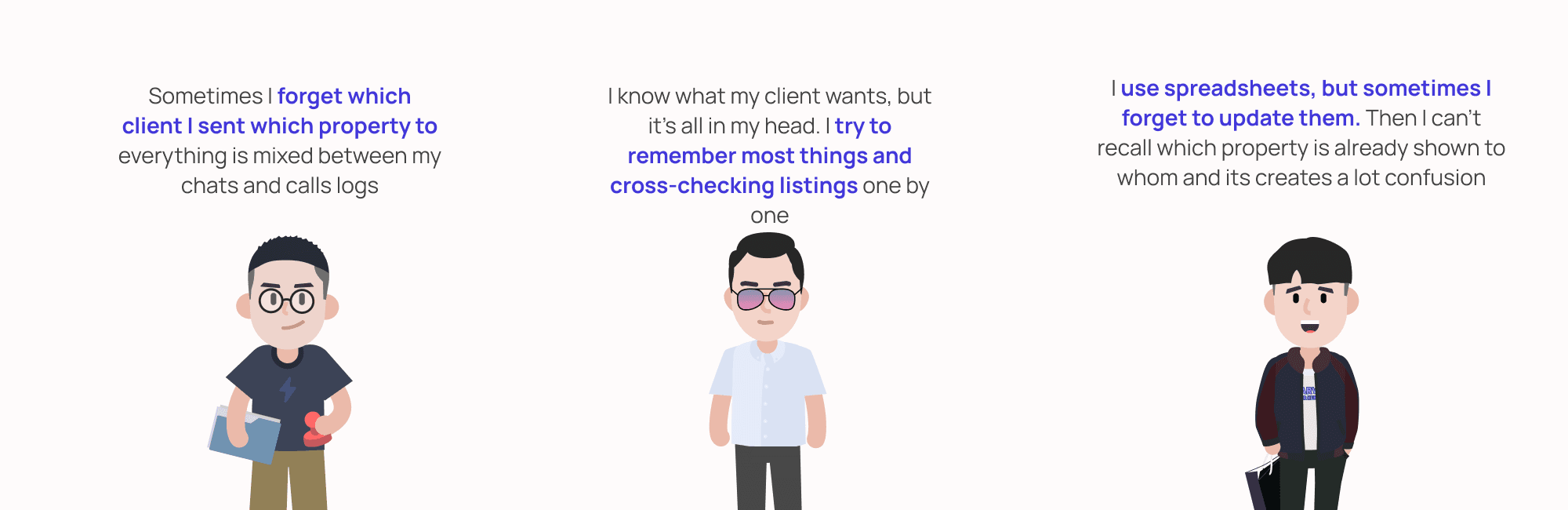
" Sometimes I forget which client I sent which property to everything is mixed between chats and calls "
In a fragmented ecosystem where brokers juggle conversations across WhatsApp, phone calls, and SMS, follow-ups and deal tracking often fall through the cracks. A unified communication layer can bring structure and accountability to these interactions.
Design Challenge
Fragmented tools (WhatsApp, calls, SMS) disrupt lead
Design Challenge
No centralised communication history to reference past interactions
Technical Challenge
Integration with external tools (e.g., WhatsApp API) poses limitations
Opportunity 2 : Information Management
" I use spreadsheets, but forget to update them. Then I can’t recall which property is already shown to whom"
Brokers operate with systems like MS Excel for properties, WhatsApp for clients, notebooks for follow-ups. A central dashboard can streamline their entire workflow while reducing there cognitive overload
Design Challenge
No single place to manage clients, listings, and tasks
Technical Challenge
Offline mode is essential in Tier 2/3 cities with unstable internet
UX Optimization Challenge
Reduce entry screen fatigue and avoid overwhelming the user
Technical Data Challenge
Duplicates in listings or client data can cause confusion and delays
DESK RESEARCH
Understanding the real-estate market gaps and opportunity spaces
Through our desk research and stakeholder interviews we recognized the critical role that brokers play as the middlemen in the real estate ecosystem.
They leverage their extensive local knowledge and personal connections to guide their clients through the property search and transaction process. Many PropTech platforms have introduced various features but the human element of assessing latent needs is still invaluable. Brokers manage their leads and maintain partnerships with Property developers and Sellers.
They rely heavily on traditional organizational tools like Excel with modern communication methods to deliver efficient client service.
Stakeholder feedback
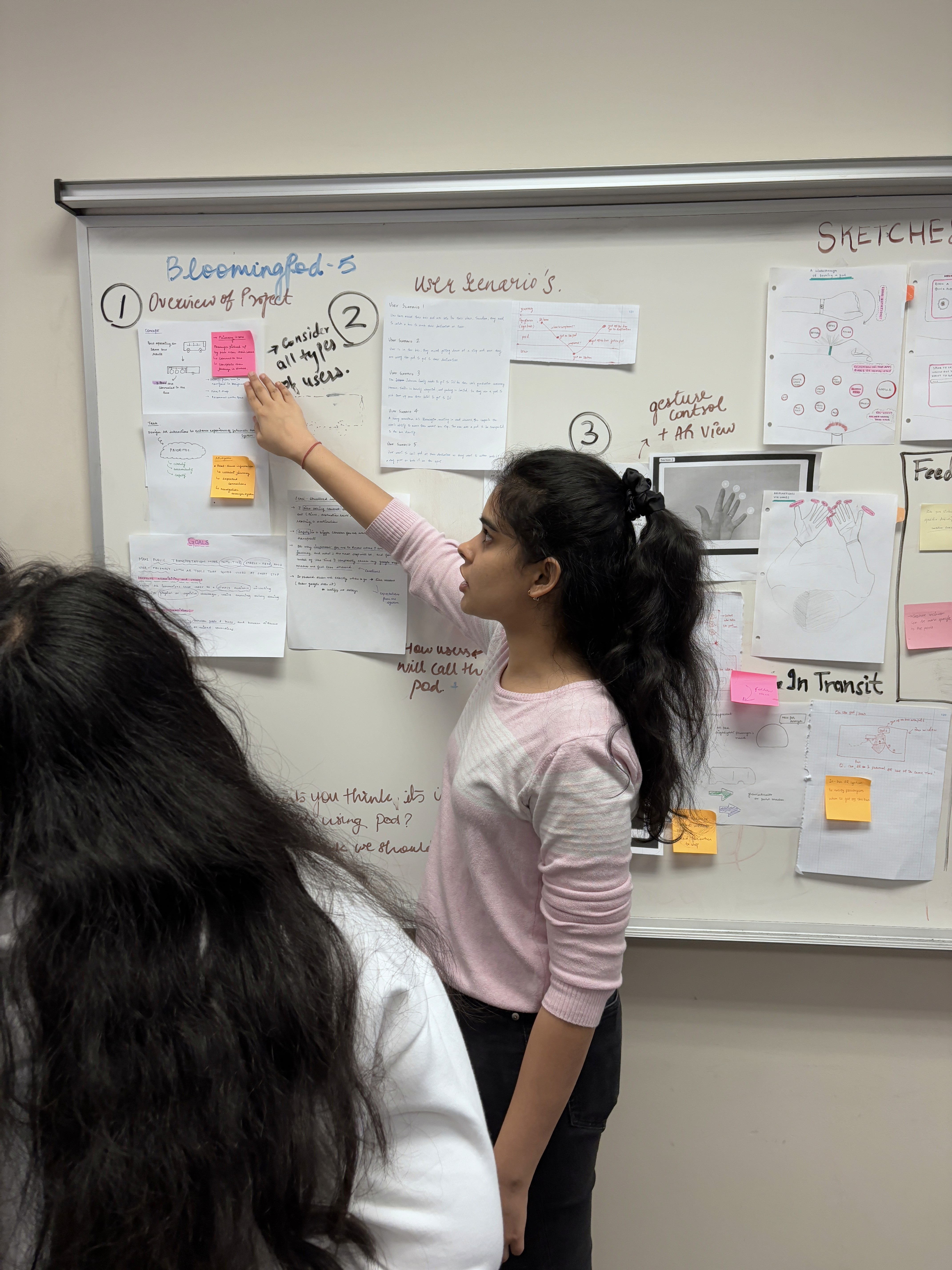
Our second big feedback session
PIVOT IN THE PROJECT - CHALLENGE
Pivot Decision: Preference Matching feature was Pushed to Future Due to technical resource constraints
While stakeholders were enthusiastic about the idea of preference-based property matching, they decided not to include it in the MVP due to current technical constraints and the additional development resources it would require. However, they recognized its long-term value and expressed interest in revisiting the feature in future phases especially if the MVP performs well and shows strong metrics.
Design Explorations with decision making
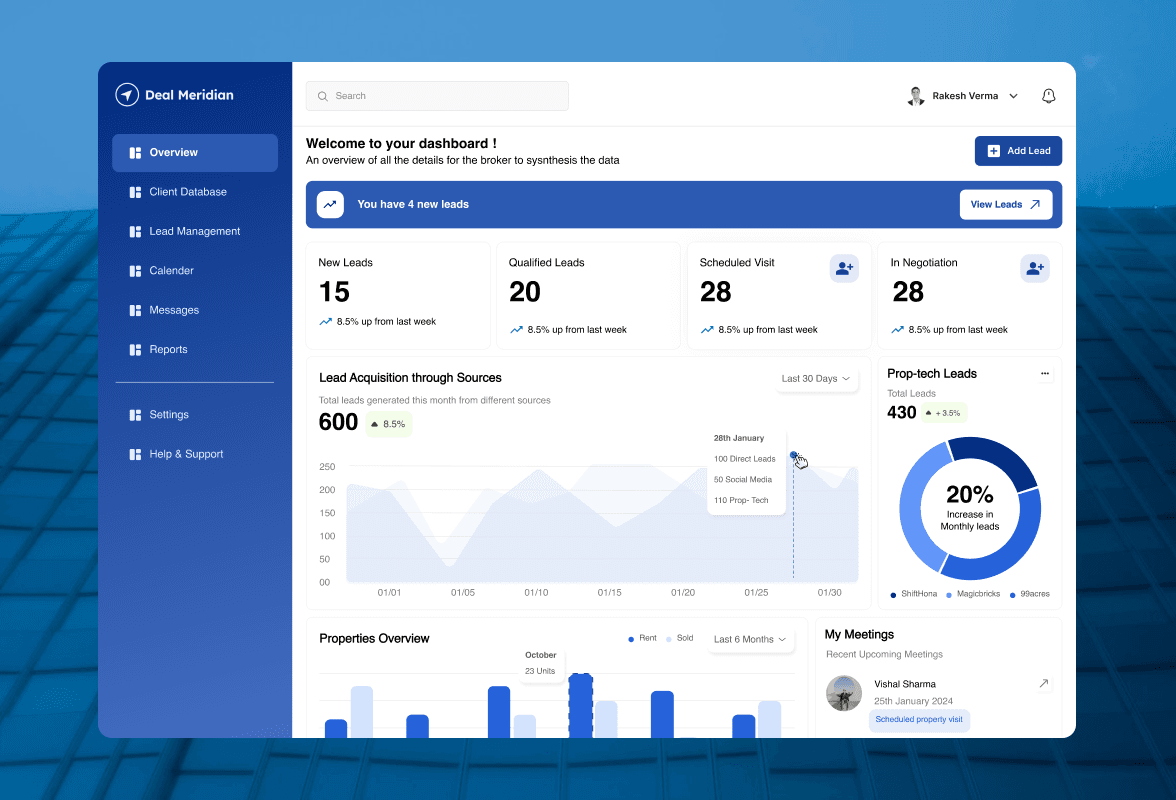
Impact of the first design role out
India’s real estate brokerage network includes over 500,000 agents, most of whom operate informally without access to structured digital tools. Despite platforms like 99acres and MagicBricks, there’s no workflow-first CRM that supports brokers in managing leads, listings, and client preferences end-to-end.
Future scope and Learnings
India’s real estate brokerage network includes over 500,000 agents, most of whom operate informally without access to structured digital tools. Despite platforms like 99acres and MagicBricks, there’s no workflow-first CRM that supports brokers in managing leads, listings, and client preferences end-to-end.